Beginner Tips
Every number in Minesweeper counts the mines in the eight cells touching it, diagonals included, and almost everything else in the game follows from that one rule. These guides start there and work outward: what each digit from 1 to 8 actually tells you, why the classic color scheme is a speed tool rather than decoration, and why a 9 can never appear on any board.
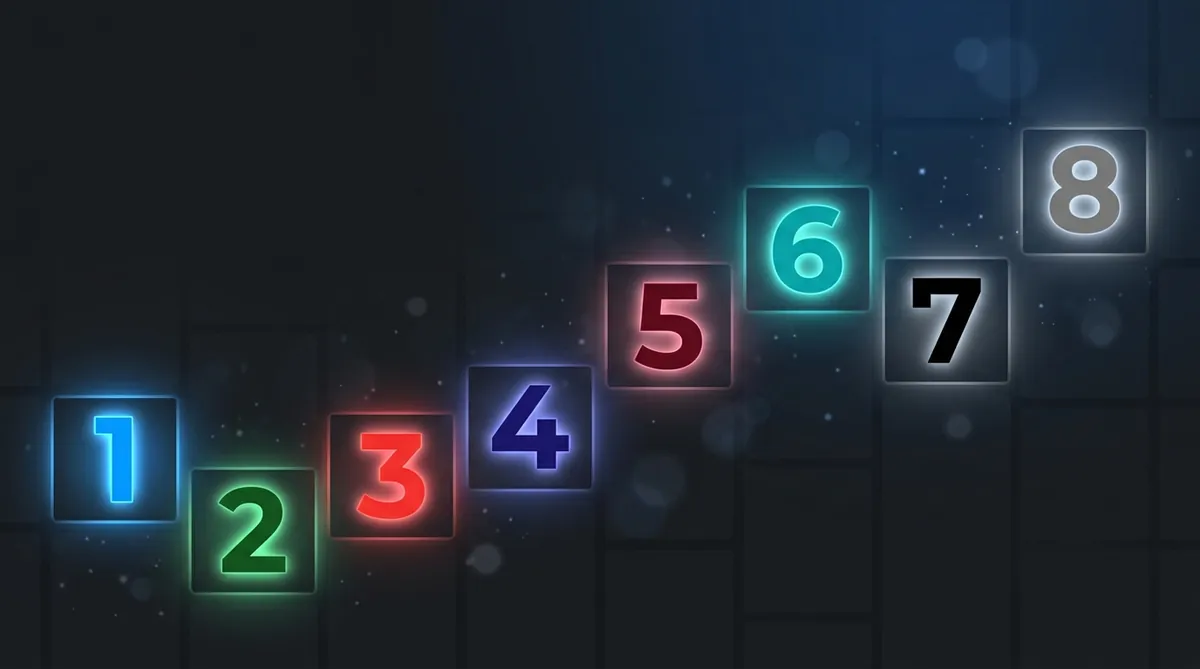
Color-Coded Strategy: What the Different Number Colors Indicate in Classic Minesweeper
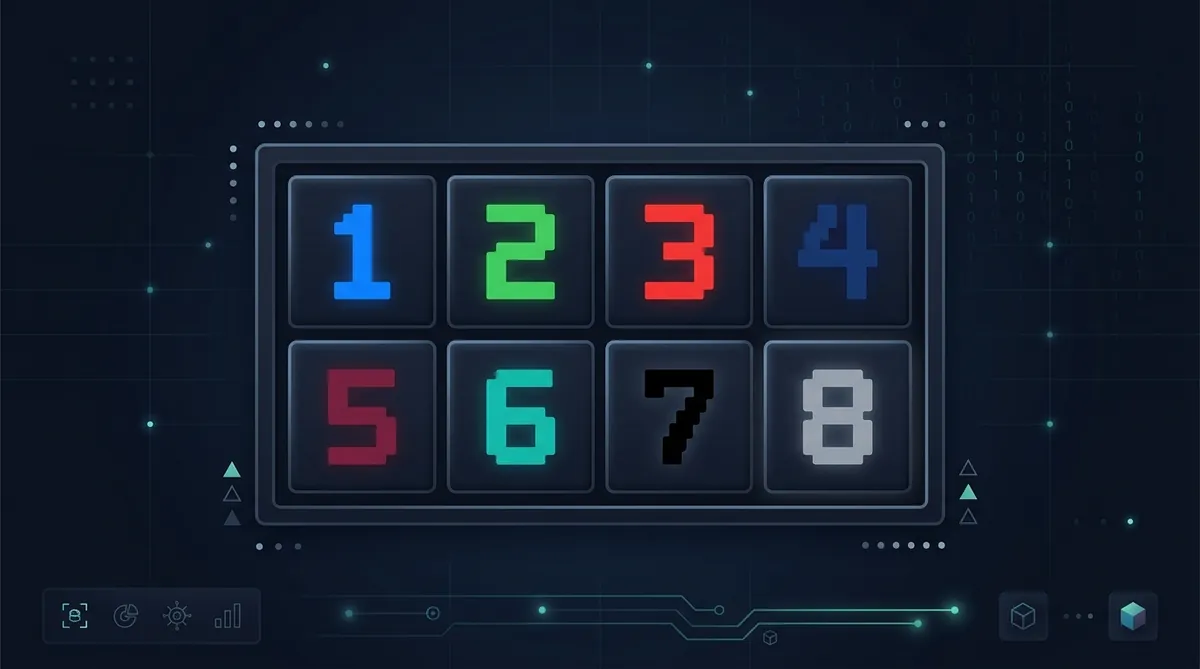
Minesweeper Number Meanings: A Detailed Chart from 1 to 8

The Probability of 7s and 8s: Why You'll Likely Never See a 9

What Does an 8 Look Like? Exploring the Rarest Number in Minesweeper
What every number tells you
- The rule behind all of it
- A number counts the mines in the eight cells touching it, diagonals included. Nothing else in Minesweeper contradicts this.
- Position changes the odds
- An edge cell has five neighbors and a corner cell three, so the same digit means something very different depending on where it sits. A 3 in the corner means every neighbor is a mine.
- The classic colors
- 1 blue, 2 green, 3 red, 4 dark blue, 5 maroon. The scheme never changes, so your eye learns to read the board before you read the digits.
- Why there is no 9
- A cell has at most eight neighbors, so 8 is the largest number the game can produce. A 9 is not rare - it is impossible.
- Why 7s and 8s are rare
- They need a very specific cluster of mines to form, and they can never appear on an edge or in a corner.
Other Minesweeper topics
Once you have read enough, put it to work: measure a board with the 3BV calculator, check where you stand with Is My Time Good?, then set a ranked time on Expert.