Minesweeper Expert Mode Tips: How to Break the 100-Second Barrier
Breaking 100 seconds on Expert comes down to four habits rather than raw speed: recognizing patterns instantly instead of working them out, chording constantly instead of occasionally, keeping mouse travel short, and restarting a bad board early rather than grinding it out.
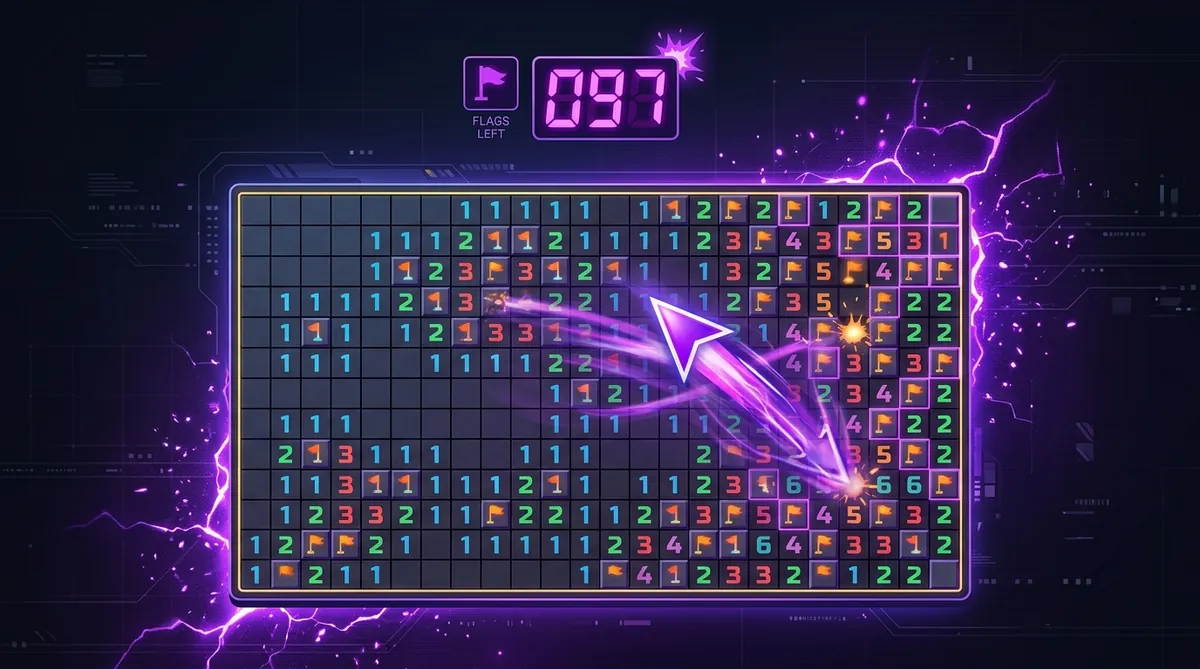
Breaking 100 seconds on Expert mode is a big deal. The board has 30 columns, 16 rows, and 99 mines. That's a lot of cells to clear fast. But players do it every day, and you can too. You just need the right habits.
Let's break down exactly what separates a 110-second player from a 90-second one.
Pattern Recognition Has to Be Instant
The biggest time sink for most players is thinking. You stop, you stare, you figure out where the mine is. That pause costs you seconds every single game.
The fix is to drill patterns until they feel automatic. The 1-2-1 formation, the 1-1 wall pattern, the corner setups. You need to see the answer before your brain even registers the question. Check out the common patterns if you want a full breakdown of the most common formations.
And don't just read about patterns. Play them. Set up the same board shapes over and over until your mouse moves before you think.
Chording Is Your Best Friend
If you're not chording, you're leaving seconds on the table. Chording means clicking both mouse buttons at once on a numbered cell to open all its neighbors at once. It's fast. Really fast.
Most players chord sometimes. Fast players chord constantly. The goal is to flag a mine, then immediately chord the number next to it. That chain reaction clears huge sections of the board in a second.
Want the full technique? Read the chording guide. Practice it until it's muscle memory.
Try Going Flagless
Placing flags takes time. Every flag is a click that doesn't open a cell. Some fast players skip flags almost entirely. They read the board, know where the mines are, and just avoid them.
So if you can trust your pattern reads, try reducing your flag count. Even cutting flags by half can shave several seconds. Read the flagless guide to see if this style fits you.
Mouse Positioning Matters More Than You Think
Look at where your mouse rests between clicks. Most players let it drift to random spots. That means extra travel time on every move.
Keep your mouse near the center of your current action zone. Move it ahead of where you expect the next opening to be. This sounds small but it adds up fast across a 200-plus click game.
Know When to Restart Fast
A bad opening can cost you 30 seconds before you've even gotten started. Dense mine clusters near the center, tiny openings, no big clear zones. These boards are hard to run fast.
Get comfortable restarting quickly. If the first few clicks don't open a decent section, just reset. This isn't giving up. It's smart strategy. Top players restart a lot. They're looking for boards that let them build speed early.
Understanding what is 3BV helps here too. High 3BV boards are harder to run fast. A lower 3BV board with good openings is your best shot at a personal best.
Get Into a Flow State
Fast games share something you might not expect. They don't feel rushed. They feel smooth. Your hands move, your eyes scan ahead, your brain isn't second-guessing. That's flow state.
You can't force it, but you can set up conditions for it. Play in a quiet spot. Warm up with a few Intermediate games first. Set a small goal like "just beat 110 seconds today." Lower the pressure and the speed often comes naturally.
And track your progress. Seeing your times drop week over week keeps you motivated. Check the leaderboard to see where you stand and what times you're chasing.
Put It All Together
Breaking 100 seconds takes a mix of things. Fast pattern reads, consistent chording, smart restarts, and a mouse that's always in the right place. None of these are hard on their own. But combining them is what gets you across that line.
Want to start practicing today? free minesweeper right now and try applying just one tip from this article. Then add another. And another. Before long, sub-100 won't feel like a milestone. It'll feel like your baseline.
Try what you just read: Beginner Minesweeper · Intermediate Minesweeper · Expert Minesweeper · No-Guessing mode · Daily Challenge. For technique deep-dives, see the patterns guide, efficiency & 3BV/s guide and Minesweeper FAQ.
Run the numbers with the Minesweeper 3BV calculator, see how good your time is, or read more in the Minesweeper guides.